Apple Sues OpenAI: The Job Interview as an Alleged Collection Tool
Apple's complaint alleges OpenAI used interviews to extract hardware secrets - internal code names, and candidates asked to bring actual batteries and logic boards for show and tell. What is alleged, what is proven, and why the hiring freeze may matter more than the verdict.
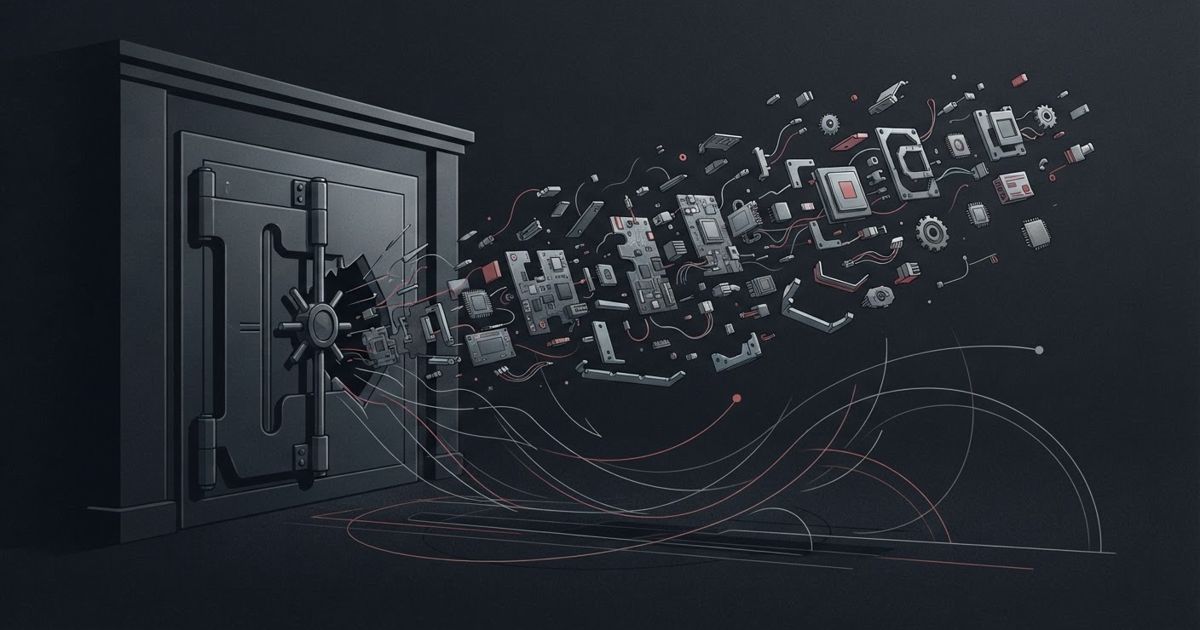
Table of contents
On 10 July 2026 Apple filed suit in the U.S. District Court for the Northern District of California accusing OpenAI of a systematic effort to extract its hardware trade secrets — not through a single leak, but through the recruiting process itself.
The specific allegations are unusually concrete, which is what makes the filing worth reading rather than summarising. Everything below is Apple's account; none of it has been tested in court.
What Apple says happened
The complaint names OpenAI, its Chief Hardware Officer, two former Apple employees and io Products. According to Apple, the pattern ran through interviews:
- OpenAI's hardware chief allegedly used Apple internal project code names during interviews to ask candidates about unreleased products — meaning the questions were specific enough to require inside knowledge to answer.
- Candidates were reportedly directed to bring "actual parts" from their Apple work to interviews for "show and tell" sessions. The complaint lists batteries, systems-in-package, logic boards and shields.
- More broadly, Apple alleges the recruiting process was structured to extract confidential material: candidates were asked to prepare "Technical Deep Dive" presentations and to bring "CAD/design artifacts" and "prototypes", and to discuss subsystem selection, integration tooling and vendor relationships.
- Separately, Apple accuses a former employee of using a co-worker's Apple-issued laptop to download confidential files about unreleased products.
Apple characterises the scheme as operating "at every level".
OpenAI's response was brief: "We have no interest in other companies' trade secrets. We remain focused on building innovative technology that empowers people everywhere."
Why the recruiting angle is the interesting part
Trade-secret cases usually turn on a departing employee taking files. This one alleges something structurally different: that the interview was the collection mechanism.
That framing is harder to defend against and harder to prove. Asking a candidate detailed technical questions about their previous work is normal hiring practice — it is how you assess whether someone actually did what their CV claims. The line between "tell me about a hard integration problem you solved" and "tell me about your employer's unreleased product" is a matter of degree, and degree is exactly what litigation argues about.
The allegation about physical components is different in kind. If candidates were genuinely instructed to bring batteries and logic boards out of Apple's buildings, that is not a grey area of interview technique.
The practical stakes
Whatever the legal outcome, the immediate operational effect points one way: this makes hiring Apple hardware people harder for OpenAI.
That matters because OpenAI is building hardware and the talent pool for consumer device engineering is small and heavily concentrated at Apple. A case like this chills that pipeline in two ways — candidates become cautious about the interview process, and Apple has an obvious interest in making examples.
OpenAI's first device is reported to be a portable smart speaker without a display, with a 2027 release. Building consumer hardware on that timeline without experienced people from the industry's most accomplished hardware organisation is a materially harder problem than doing it with them. If the suit drags on for months or years, the delay may end up mattering more than the verdict.
What to keep in mind while reading coverage
Three things are worth holding onto:
- These are allegations. Apple's complaint is a one-sided document by design. OpenAI has denied the substance.
- The vivid details are the least legally settled. "Show and tell" with actual parts makes for a striking headline, but a complaint can characterise a practice more sharply than the evidence eventually supports.
- The chilling effect starts immediately regardless. Litigation does not need to succeed to change hiring behaviour, and that is the consequence already in motion.
For the broader competitive picture this sits inside, see our coverage of what Meta's Q1 numbers actually say and of Claude Opus 5 arriving at roughly half the price of the frontier — the same race, viewed from the software side.
Reporting: Apple's complaint filed 10 July 2026 in the Northern District of California, as reported by CNBC, TechCrunch and MoneyWise. Allegations are unproven; OpenAI denies them.