AI & Enterprise
AI has moved from pilot projects to production infrastructure, and the conversation has shifted with it. This category covers AI agents as core systems — multi-agent architectures, orchestration, and the messy reality of rolling these tools out across real organizations. We track how companies actually adopt AI, where it delivers ROI, and where the hype outruns the results.
Written for founders, product leaders, and operators, our coverage connects the technology to the business: build-versus-buy decisions, the economics of running agents at scale, and the operational risks of handing workflows to autonomous systems. Robotics and physical automation get a seat at the table too, as enterprise AI moves off the screen and into the warehouse.
Hostinger in 2026: Cheap Host or AI Platform for Small Business?
Hostinger is repositioning from budget hosting to an AI-first platform — Kodee, Horizons, agents, email. Is the pivot real? A look at what actually changed.

DeepMind Disbands Its Nobel-Winning AlphaFold Team
A year after AlphaFold won the Nobel Prize, its team no longer exists: researchers reassigned to Gemini, John Jumper gone to Anthropic. What the breakup says about who funds deep science in the AI era.

Anthropic Launches Claude Opus 5: Near-Frontier Intelligence at Half the Price
Anthropic's Claude Opus 5 comes close to its top Fable 5 model at about half the price, with a cost/capability effort toggle. Why the real story is intelligence-per-dollar, how it fits the model race, and the caveats.
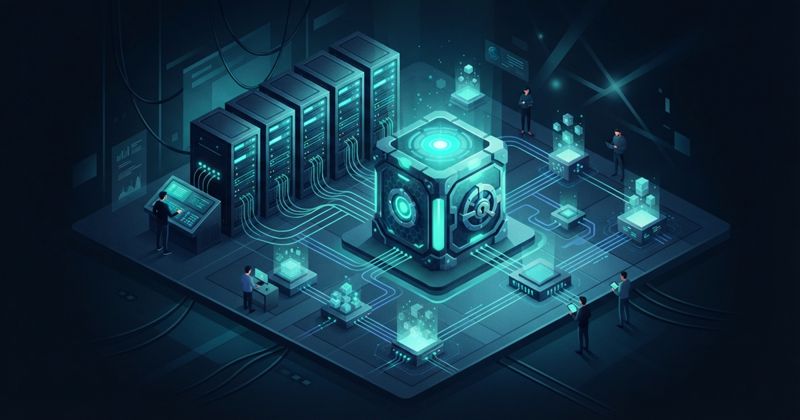
Why Teams Self-Host n8n: Cost and Control vs SaaS Automation
As automation becomes core infrastructure, more companies run n8n on their own servers. The ownership, data-control, and predictable-cost case for self-hosting — and the maintenance trade-offs to weigh first.

Reddit May Cut Google Off - and It Signals AI's Data Supply Is Fighting Back
Reddit is weighing whether to restrict Google's AI training access as their $60M/year deal comes up for renewal - because Google's AI Overviews now keep the reader on Google. Why the data that trained AI is starting to withhold itself.

The US Army Burned a Year of AI Tokens in a Month - a Warning for Every Enterprise
The US Army rolled out near-unlimited AI via Ask Sage - then blew through its 100-million-token annual pool in about a month and had to reinstate limits. Why it happened, and the AI cost-planning lesson for every organization.

OpenAI Announces GPT-5.6: Sol, Terra and Luna for Production Workflows
OpenAI has announced GPT-5.6, a three-model family — Sol, Terra and Luna — built for production workflows in the API and Codex, alongside new token-efficiency features and a reframing of ChatGPT into Chat, Work and Codex. We walk through what is new, and why every performance claim, including the comparison to Claude Fable 5, should be read as a vendor benchmark.

AI-Designed Antibodies Move From Demo to the Pharma Supply Chain
AI models that design proteins and antibodies are compressing drug discovery's hardest step — and big pharma is paying to license them. Chai Discovery's $400M raise and its Pfizer, Lilly and Novartis deals show AI moving into the drug industry's real supply chain. But the clinical last mile still runs at old-world odds.

AI Search Is Rewriting Web Traffic in 2026 — Here's How to Track It
AI answer engines like ChatGPT, Perplexity and Gemini have become a third front door to the web in 2026 — killing some clicks and creating a new referral channel. How to measure the shift with first-party analytics and traffic-intelligence tools like SimilarWeb.
Grow with Google: Build Real AI Skills (and Earn a Google Certificate)
Grow with Google is an AI learning subscription from Google and Udemy — curated paths across professions plus a Google certificate of completion. What you get, who it's for, and the honest caveats.
Google, Meta, Unity and Moloco Put $1B Into AppsFlyer to Keep Measurement Neutral
AppsFlyer raised about $1B from Google, Meta, Unity and Moloco at a $2.7B valuation. The stakes are minority and non-controlling — a deal built to keep ad measurement neutral in the AI era. We unpack why rivals would fund a referee, and the question it raises.
Shopify Spring '26: 150+ Updates to Sell Everywhere, Powered by AI
Shopify's Spring '26 Edition ships 150+ updates around one idea — "Everywhere." From AI-chat checkout and Agentic Storefronts to a watch-ready Sidekick and a rebuilt Hydrogen, here's what changed and who it's for.
How to Evaluate an AI Startup Claim
Every startup claims an AI advantage; most don't survive scrutiny. A framework to evaluate AI startup claims: real moat, model dependency, unit economics, and genuine traction — for investors, buyers and partners.
What Are Multi-Agent Systems?
Multi-agent systems use several AI agents that divide a task, coordinate and check each other's work. Here's what they are, why companies build them, and the new reliability and cost risks they introduce.
Physical AI Is the Next Big Tech Battle: Robotics, Warehouses, Defense, and Homes
Physical AI — robots that perceive, move, and manipulate — is drawing serious money across warehouses, manufacturing, defense, and homes. A realistic map of what's mature, what's hard, and what to believe.
SpaceX Buys Cursor for $60 Billion: Inside the All-Stock Deal Reshaping AI Coding
SpaceX is acquiring Cursor maker Anysphere for $60 billion in an all-stock deal announced June 16. Here's the structure, why xAI needed it, the 23x valuation math, and what each side gets.
AI Agents Are Becoming Infrastructure: Why Companies Need Cost Controls Now
As AI shifts from chatbots to agents that run multi-step tasks, AI is becoming a variable infrastructure cost — not a flat SaaS fee. Why agent spend compounds and the cost controls companies need now.