China's Multi-Trillion-Parameter Moment: Qwen and Kimi Chase the Frontier - in the Open
In one week, Alibaba previewed the 2.4T-parameter Qwen3.8-Max and Moonshot released the 2.8T open-weight Kimi K3, both benchmarking against Anthropic's Fable 5. The parameter counts matter less than the strategy: chasing the frontier in the open.
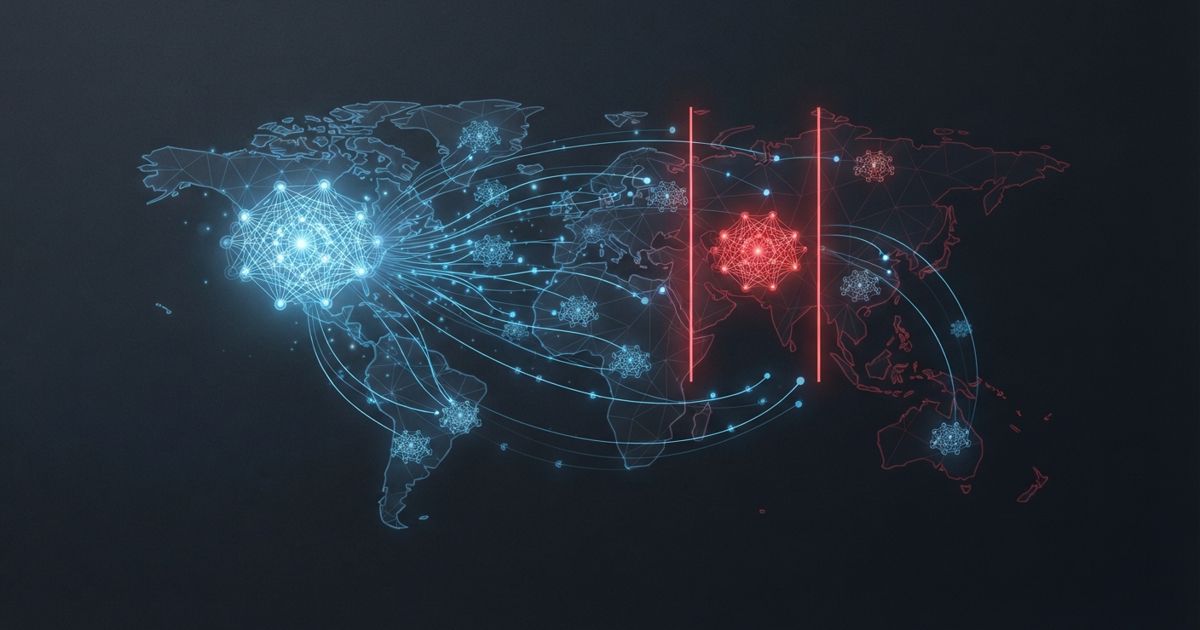
Table of contents
Two Chinese AI labs just put multi-trillion-parameter models on the table within a single week — and the more telling detail isn't the parameter count. It's that they're chasing the frontier in the open, while US labs keep their best models closed.
What launched
At the World AI Conference in Shanghai on July 19, Alibaba previewed Qwen3.8-Max-Preview, a 2.4-trillion-parameter model and the first in the Qwen family above a trillion parameters to be multimodal — handling images, video and documents alongside text. Alibaba claimed it ranks second only to Anthropic's Claude Fable 5; its shares rose as much as 5.4% on the news. Two days earlier, Moonshot AI had released Kimi K3, a 2.8-trillion-parameter open-weight model reported to outperform everything except Fable 5 and OpenAI's GPT-5.6.
Both companies are following the same playbook: ship the model in paid products first, release the weights afterward.
Why "open" is the real strategy
The US lead is usually measured as who has the single smartest model. China increasingly looks like it's playing a different game — not necessarily winning that race, but making near-frontier intelligence cheaper, more abundant, and harder to contain.
Open weights do all three at once. A model you can download can't be embargoed, can't be metered, and can't be walled off by an export rule. That reframes the competition: the very top of the frontier may stay American and closed, but the floor — the level of capability freely available on any hard drive — keeps rising globally. It's a different lever than the one export controls were built to pull, a theme that runs through both the global AI chip race and how regulators are trying to keep up.
What it means for businesses
For anyone actually deploying AI, more capable open-weight models are a genuine option, not just a geopolitical talking point:
- Cost and control. Open weights you can self-host change the build-vs-buy and vendor-comparison math — no per-token meter, and data that never leaves your environment.
- Benchmark with skepticism. "Second only to Fable 5" is a vendor claim from a preview; wait for independent evaluations before betting a workload on it.
- Multimodal is now table stakes. The interesting differentiation is shifting from "can it see?" to what the model can actually do with what it sees.
Bottom line
Washington can keep the single best model behind a wall. What it can't easily stop is a good-enough one that's already been copied everywhere. Two multi-trillion-parameter Chinese models in one week — one of them open — is a reminder that the frontier and the floor are moving on different tracks, and the floor is the one most of the world will actually run on.
Reporting: Bloomberg, South China Morning Post, MarkTechPost. Performance rankings cited are vendor claims pending independent benchmarks.