Alphabet and Tesla Beat Expectations - and Their Stocks Fell Anyway. The AI Capex Reckoning Has Started
Alphabet and Tesla both topped revenue and raised AI spending - and both stocks dropped. Alphabet's free cash flow went negative $5.9B on capex up to $205B; Tesla's capex jumped 142%. Why the market's mood on AI spending has flipped from vision to risk.
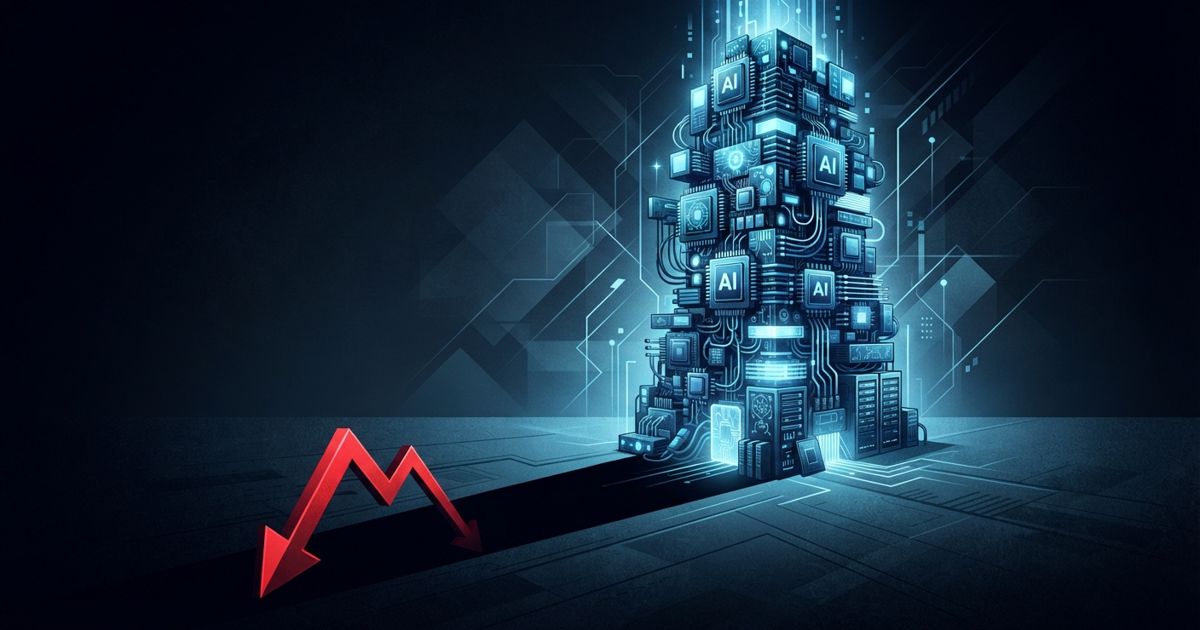
Something unusual happened this week: two of the world's most valuable companies beat revenue expectations, raised their AI ambitions, and watched their stocks fall anyway. Alphabet and Tesla both reported strong top lines and then slid — Alphabet down around 4%, Tesla off more than 5%. The market wasn't reacting to weakness. It was reacting to the bill.
The numbers behind the nerves
- Alphabet lifted its 2026 capital-expenditure guidance to $195–205 billion, up from a prior $180–190 billion, and its free cash flow swung to negative $5.86 billion — versus roughly positive $25 billion a year earlier — as AI infrastructure spending ballooned. This despite Google Cloud revenue jumping 82%.
- Tesla's capex surged 142% year-on-year to $5.79 billion, pushing free cash flow to negative $1.1 billion, with more than $25 billion in capex guided for the year.
Strong revenue, negative cash flow, and spending guidance that keeps climbing. If you want to make sense of reports like these, our guide to reading a tech earnings report without getting lost is a useful companion.
The mood has flipped
For the past two years, aggressive AI spending read as vision — proof a company was building the future. This week it read as risk. Investors are increasingly asking the uncomfortable question: where are the returns that justify hundreds of billions in chips, data centers and power?
And the spending isn't slowing. OpenAI has reportedly raised its infrastructure plans toward $750 billion through 2030, and AMD is set to invest heavily in Anthropic as Claude scales onto more AI silicon. The build-out is accelerating even as the market grows anxious about it — the same tension we flagged in the AI capex squeeze on enterprise budgets and the chip race chasing cheaper inference.
What it means
None of this signals AI is a bubble about to pop — Alphabet's cloud growth is real, and demand for compute is genuine. What it signals is a shift in who bears the burden of proof. The era where "we're spending big on AI" was enough to lift a stock is ending; investors now want to see the spending convert into durable profit, not just bigger data centers.
Bottom line
Investors no longer fear missing the AI boom. They fear paying for it right before the returns have to show up. For the hyperscalers, the challenge in the quarters ahead isn't spending more — it's proving the last round of spending was worth it.
Reporting: CNBC, Saxo. Figures are from the companies' latest quarterly results; infrastructure plans cited are as reported.